
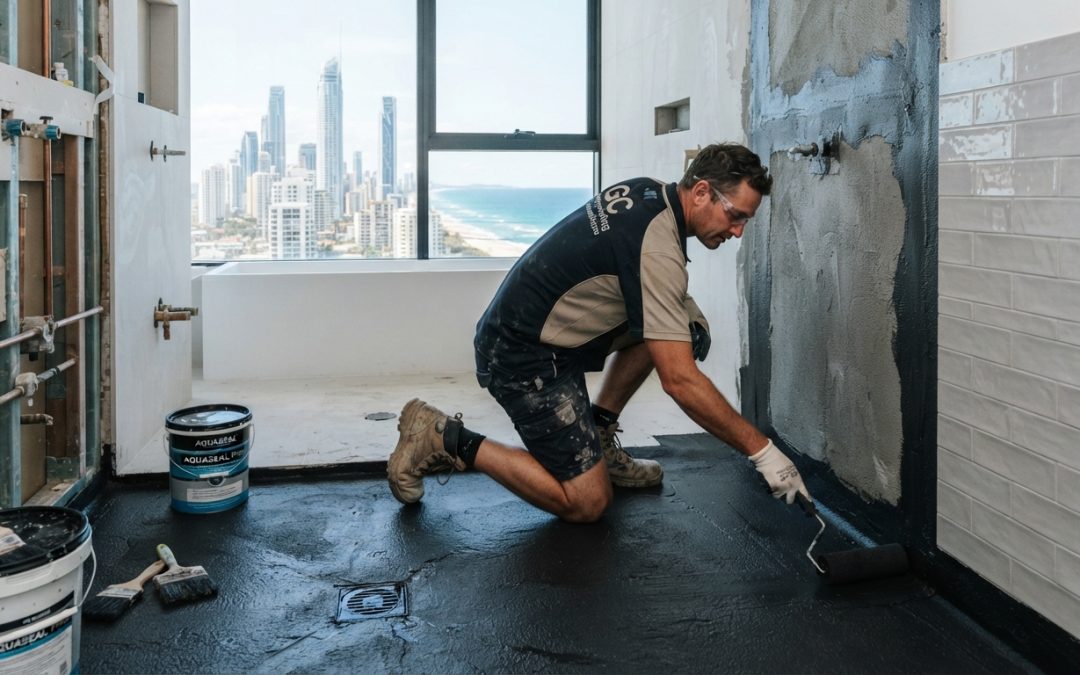
When planning a bathroom renovation, most homeowners begin with the exciting decisions: tiles, vanities, tapware, lighting and shower screens. While these features create the finished appearance, the most important work is often hidden beneath the surface.
Correct waterproofing is one of the most critical elements of a successful bathroom renovation. Without an appropriately designed and installed waterproofing system, water can penetrate surrounding materials, contribute to deterioration and result in expensive repairs.
For homeowners across the Gold Coast, from Robina and Burleigh Heads to Mudgeeraba and Palm Beach, understanding what happens behind the tiles is essential before beginning a bathroom renovation.
Why Is Bathroom Waterproofing So Important?
Bathrooms are regularly exposed to water, steam and humidity. Showers, baths and wet floors place considerable demands on surfaces and construction materials.
Tiles and grout help provide a practical, cleanable finish, but they should not be treated as the complete waterproof barrier.
A properly installed waterproofing system helps protect vulnerable areas against moisture penetration.
When waterproofing is defective, problems can develop gradually and may remain hidden until visible damage occurs.
Possible consequences include:
- Water damage to floors and wall linings.
- Deterioration of underlying building materials.
- Persistent dampness and mould growth.
- Damage to adjoining rooms.
- Costly removal and reconstruction of finished surfaces.
For this reason, waterproofing should be planned before selecting decorative finishes.
What Areas of a Bathroom Need Waterproofing?
The exact waterproofing requirements depend on the bathroom layout, construction type and applicable building standards.
Particular attention is generally required around showers, floor junctions, wet-area walls, penetrations and transitions between materials.
Walk-in showers, for example, require careful consideration of floor falls, drainage and water containment.
A bathroom on an upper floor may also present different risks from one built on a ground-level concrete slab.
An experienced renovation contractor should coordinate the design with appropriately licensed waterproofing and plumbing trades.
In Queensland, wet-area work must comply with applicable requirements of the National Construction Code and relevant Australian Standards.
Homeowners should avoid assuming that a waterproofing product is suitable simply because it is advertised as water-resistant.
Can You Waterproof a Bathroom Yourself in Queensland?
Bathroom waterproofing is regulated building work in Queensland, and applicable licensing requirements must be followed.
The Queensland Building and Construction Commission (QBCC) advises homeowners to engage appropriately licensed professionals for regulated waterproofing work.
Similarly, plumbing alterations must be carried out by suitably authorised tradespeople.
Before engaging a contractor, check the relevant licence and confirm which trades are responsible for waterproofing, plumbing, tiling and certification.
Taking shortcuts during these stages can put the finished renovation at risk.
A properly documented renovation should make responsibilities clear before work begins.
What Causes Waterproofing Problems?
Waterproofing failures can result from several issues, including inadequate surface preparation, unsuitable materials and poor detailing.
The QBCC has repeatedly highlighted waterproofing defects as a concern within Queensland residential construction.
Common risk areas include:
Poor substrate preparation
Waterproofing products must be applied to surfaces prepared in accordance with the selected system’s requirements.
Incorrect junction detailing
Corners, floor-to-wall transitions and penetrations require careful treatment.
Inadequate drainage design
A beautiful walk-in shower may still perform poorly if water does not drain as intended.
Insufficient coordination between trades
Plumbing, waterproofing, tiling and shower-screen installation need to be appropriately sequenced.
Premature application of finishes
Waterproofing materials must be installed and allowed to cure according to their manufacturer’s instructions.
Good renovation management addresses these issues before tiles conceal the underlying work.
How Can You Recognise a Bathroom That May Be Leaking?
Potential warning signs include cracked or lifting tiles, persistent damp patches, peeling paint near wet areas or staining on an adjoining wall or ceiling.
A recurring musty smell may also suggest excess moisture.
However, these symptoms do not automatically prove that the waterproofing membrane has failed.
Leaks may originate from plumbing, fittings, shower screens or other sources.
An appropriate inspection is needed to identify the cause before deciding whether repairs or a full renovation are necessary.
Avoid simply applying sealant over a suspected serious leak without diagnosing the underlying problem.
Should You Replace the Plumbing During a Bathroom Renovation?
Not every bathroom renovation requires complete plumbing replacement.
However, when walls and floors are opened, it can be a useful opportunity to assess the condition and location of existing pipes, wastes and fittings.
Moving a shower, toilet or vanity can increase the complexity and cost of the project.
Sometimes retaining the existing layout is the most practical option.
In other cases, relocating fixtures can significantly improve accessibility, storage and daily usability.
The decision should account for drainage, structural constraints, waterproofing and budget.
What Should You Ask Your Bathroom Renovation Builder?
Before accepting a quotation, ask how waterproofing will be managed and documented.
The quotation should clearly describe the renovation scope, including demolition, plumbing, waterproofing, tiling, fixtures and finishing.
Confirm who will undertake regulated work, what products are proposed and which certificates or handover documents are applicable.
Also discuss possible hidden damage, especially in older bathrooms where moisture problems may only become visible after demolition.
A well-planned renovation allows for these risks rather than ignoring them.
Planning a Bathroom Renovation on the Gold Coast?
At Renovate Carpentry & Construction, bathroom renovations form part of our residential renovation services, with attention to layout, materials, workmanship and coordination.
Based in Bonogin, we work with homeowners across the Gold Coast and surrounding regions, including Robina, Burleigh Heads, Mudgeeraba, Currumbin and Palm Beach.
Whether you want a modern walk-in shower, improved storage or a complete bathroom transformation, successful results begin with sound planning and appropriate construction methods.
Contact Renovate Carpentry & Construction on 0478 674 215 to discuss your bathroom renovation and request a quotation.
A qualified contractor should assess the property and applicable compliance requirements before work begins