
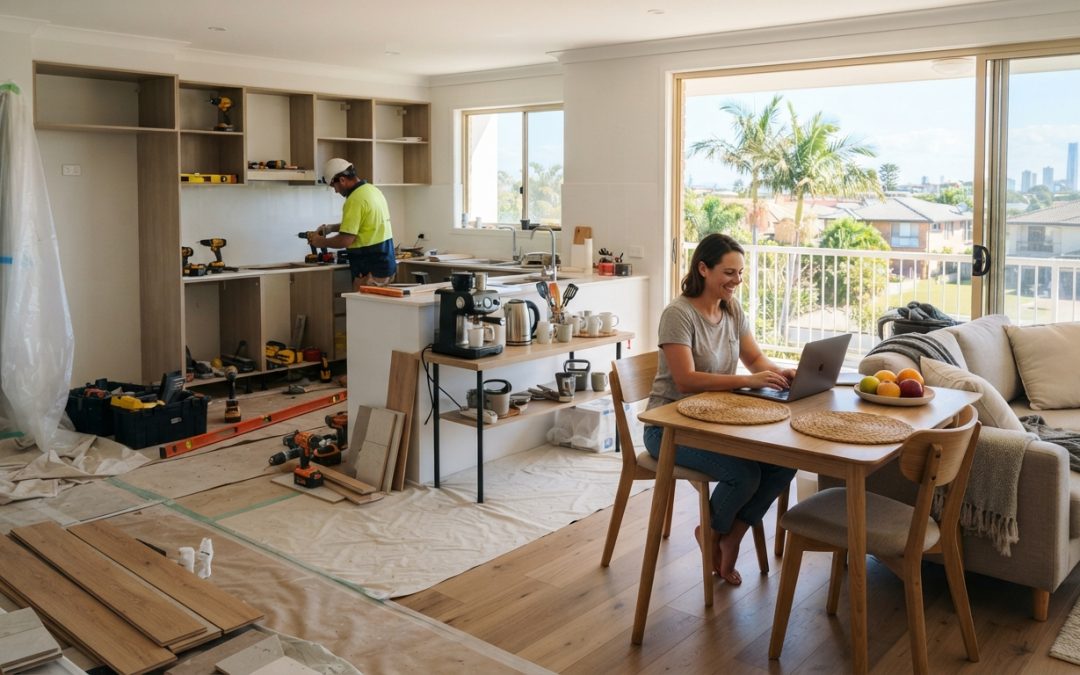
One of the first questions homeowners ask when planning a renovation is whether they will need to move out while the building work takes place.
The answer depends on the scope of the project, the areas being renovated, the household’s needs and whether the property can remain safe and functional during construction.
It is possible to remain at home during some renovations, but larger projects may require temporary accommodation for certain stages.
Understanding the likely disruption before work begins can help you make informed decisions and avoid unnecessary stress.
For families across the Gold Coast, Brisbane and surrounding communities, careful renovation planning is particularly important when work affects kitchens, bathrooms, bedrooms or essential services.
Can You Stay in Your House While It Is Being Renovated?
In many cases, yes.
If work is confined to one room and the remainder of the property can be separated from the construction area, continuing to live at home may be practical.
For example, a spare bedroom renovation or relatively contained carpentry project might allow normal household activities to continue.
However, projects involving extensive demolition, structural alterations, major electrical work or significant plumbing changes may create more serious disruption.
A property should not remain occupied if construction activities make essential areas unsafe or unsuitable for normal use.
Your builder should assess the planned work and explain which areas will be affected before construction begins.
What Types of Renovations Cause the Most Disruption?
Different renovation projects create different challenges.
Kitchen renovations
A full kitchen renovation may involve removing cabinets, appliances, plumbing and electrical connections.
Without a functioning kitchen, everyday meal preparation becomes more difficult.
Bathroom renovations
A bathroom may be unavailable while demolition, plumbing, waterproofing, tiling and finishing take place.
Households with only one bathroom may need alternative facilities.
Home extensions
An extension can sometimes be constructed with limited access to the existing home until the final connection stage.
However, opening external walls, changing roofing or modifying structural elements may temporarily affect occupancy.
Whole-home renovations
Projects involving several rooms, flooring replacement and service upgrades can make it difficult to maintain a safe living environment.
In these circumstances, temporary accommodation may be the more practical choice.
How Can You Manage Dust During Renovations?
Dust is one of the most common concerns for homeowners staying in an occupied property.
Demolition, sanding, cutting and construction activities can generate significant airborne particles.
A responsible construction plan should consider how work areas can be isolated from occupied rooms.
Depending on the activity, suitable measures may include temporary barriers, extraction equipment, controlled work methods and regular cleaning.
Particular care is needed where older building materials may contain asbestos or other hazardous substances.
Suspected asbestos-containing materials should be assessed and handled according to applicable Queensland requirements by appropriately qualified people.
Families should not attempt to remove potentially hazardous materials themselves.
Children, pets and anyone with respiratory sensitivities may require additional protection from construction activities.
How Can You Prepare for a Kitchen Renovation?
If the existing kitchen will be unavailable, consider setting up a temporary food preparation area elsewhere in the house.
Depending on available space and safe electrical access, this might include a refrigerator, microwave, kettle and basic food storage.
Choose a clean area away from construction dust and building materials.
Remember that temporary appliances must be used according to their safety instructions.
Planning simple meals and reducing the amount of equipment needed can make the renovation period more manageable.
If the kitchen will be completely disconnected for an extended period, discuss whether remaining at home is realistic.
What Happens When Your Only Bathroom Is Renovated?
For homes with one bathroom, this may be the deciding factor in whether residents can remain on the property.
A complete bathroom renovation can involve several stages when showers and toilets are unavailable.
Temporary facilities may be possible in some circumstances, but their suitability depends on plumbing arrangements, access and the project’s duration.
Ask your builder to explain when each facility will be disconnected and when it is expected to become usable again.
Do not assume a newly tiled shower can be used immediately. Waterproofing products, adhesives and sealants may require specified curing periods.
An accurate schedule helps households plan around these limitations.
How Can You Keep Children and Pets Safe?
Renovation sites can contain sharp materials, exposed services, tools, temporary openings and moving equipment.
Children and pets should be kept away from active work areas.
Temporary barriers and clearly defined access routes may help, but they must not interfere with emergency exits or the builder’s safety requirements.
Discuss delivery times, working hours and access arrangements before work begins.
If children need to sleep or study at home, noisy work may need to be considered when planning the household’s routine.
The builder must remain responsible for managing construction safety, while occupants should follow agreed site-access restrictions.
How Much Extra Time Should You Allow?
Renovation schedules depend on the work involved, material availability, approvals and unforeseen site conditions.
For example, opening an older wall may reveal damage or services that need attention before work can continue.
Weather may also affect extensions and roofing work.
Ask your builder for a realistic construction programme identifying major stages and dependencies.
It should explain when demolition, structural work, plumbing, electrical installation, finishing and final inspections are expected.
A schedule cannot eliminate every delay, but clear communication helps homeowners make alternative arrangements when necessary.
Should You Move Out During a Major Renovation?
Temporary accommodation may be advisable if the project affects essential services, creates significant dust exposure or makes several rooms inaccessible.
Other considerations include household size, mobility needs, children, pets and the expected duration of the work.
Moving out may reduce disruption to daily life and, in some projects, make access easier for tradespeople.
However, accommodation costs should be considered alongside the renovation budget.
There is no universal answer.
The right decision should follow an assessment of the actual construction plan and site conditions.
Planning a Home Renovation on the Gold Coast?
At Renovate Carpentry & Construction, we understand that renovating an occupied home requires planning, communication and consideration for the people who live there.
Our residential services include home renovations, extensions, kitchens, bathrooms and carpentry work.
Based in Bonogin, we work across the Gold Coast and surrounding regions, including Robina, Burleigh Heads, Mudgeeraba, Palm Beach and other local communities.
Whether you’re renovating a single room or planning a larger transformation, discussing the practical disruption early can help you prepare.
Contact Renovate Carpentry & Construction on 0478 674 215 to discuss your project and request a free consultation.
Occupancy decisions should be based on the renovation scope, site-specific hazards and professional safety advice.